Translation 2:
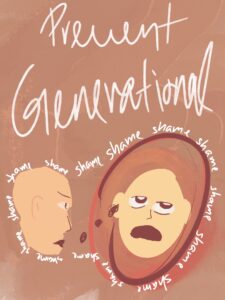
Synthesis Essay First Draft:
How to Control Humanity
Keeping order in our society requires faith in a set of rules; whether that be spirituality, religion, or tradition, we have learned to follow, rarely doubting what you are learning. All of our powerful leaders, regardless of location, are aware that you share the ideology of friends or family and will use your beliefs to their advantage. The true question is; what draws the line between inspiration and manipulation? The ability to distinguish your biased projections from the reality we face can and will blur with the right words from a charismatic leader. The right leader could also help you realise you were participating in the oppression of a community. While religious faith may promote unity for a certain group, political figures should not align their policies with religious scriptures as the ideals intertwine; spreading propaganda, prejudice, and hate.
History shows religion and power have been deeply intertwined, a compelling example being the Protestant Reformation of the 16th century. As preached by the Monarch, priests, and clergymen, it was in the best interest for you, if a common man, to obey only the Bible’s teachings as taught. Anna Grzymala-Busse, a political scientist at Stanford University, writes in “Tilly Goes to Church: The Religious and Medieval Roots of State Formation in Europe” (2020), The Church used their wealth through land ownership, ranging from “25% to 45%” of land in Europe or taxation, generating a “10% tax on all income”. (pg.8-9) The Church members sought to portray themselves as the highest form of authority, using their already established power while further conditioning the average person to never question the authority put upon them. The conflict of power with Pope Gregory VII and Henry IV caused the difference between spiritual and political authority to become almost indistinguishable. The average person, not educated enough to assess properly the clear monopoly the church holds over Europe believed Pope Gregory VII to share only the word of god, justifying the clear hunger for power through his affiliation with the church.
Synthesis Essay Final Draft:
You Are Not Your Parent
The following message is dedicated to those who flinch whenever they are told “you look just like your mother/father!” One day, you will be known as yourself, and you will create that person to embody. Abusive parents take power by blaming you for their shortcomings, covering your bruises and making you believe that it truly is for your own good, this is your family’s native tongue. Your parents very likely learned and internalized the hurt you now feel from their own parents. You do not have to follow every command, you will not inherit your father’s anger or your mother’s negligence. If you want my message to be true, you can no longer be silent. While some may disagree, you must speak of your experiences to overcome them and distinguish the language learned from your parents from your true self.
I know you did not choose this lineage, the verbal language of manipulation and insults or the body language of raising a hand in the air from rage. This is all that you know; living through such behavior fluency in your family tongue is inevitable. Knowledge in your family tongue should not discourage you, as every action your parents took, like their parents, is inevitably a choice. Generational trauma, though, passes down almost as if it truly was encoded in your DNA, as if your future is sealed and you are destined to treat the next generation as you were while justifying with “my parents treated me much worse, you should be grateful.” In that same thought, you must understand how abuse could have such a stronghold on a lineage, you are mentally stunted from abuse. Boston College PHD scholar and researcher, Jooyoung Kong, in her article Childhood Maltreatment and Psychological Well-Being in Later Life: The Mediating Effect of Contemporary Relationships with the Abusive Parent. (2018) claims, when adults, the children of abusive mothers, whether it was neglect, verbal abuse, or physical abuse all show a negative psychological impact from the endured abuse long term in their adult lives. Through the collection of multiple aged data sets of abused individuals from adolescence, Kong shows how large the effect of abuse truly is; it will last your lifetime. This is exactly how the cyclical nature of generational trauma prevails.
Do not allow your familial tongue to embody you, do not stand in the fearful shadow of your parents; your fluency is a power. The fear of looking a parent in the eye, reading the anger on their face, predicting what they may do next is your guideline on how to end the cycle that has haunted your bloodline. As of now, you may only know of your familial tongue and the effect you feel from their cruelty; hence why you must have fluency in your familial tongue before you can discard it. Abuse easily skews with your sense of reality as a child, all you know is that your connection with your parents is far more different than your peers and this is how the generational trauma becomes abuse. While now your parents may seem full of anger and violence now, they were once just as fearful as you are. Researchers from University of Bucharest, Charlotte El-Khalil et al. in their article Impact of intergenerational trauma on second-generation descendants: a systematic review (2025) claim, intergenerational trauma foster directly in a person through “mistrust, emotional restraint, and heightened moral rigidity” then causing their children to experience parental PTSD, triggering “heightened levels of distress, anxiety, depression, and trauma-related symptoms” as a byproduct. If not treated properly, generational trauma will foster a sense of anger and resentment for others. It is exactly how parents turn to abuse and continually perpetuate the cyclical abuse.
I want you to one day look in the mirror and not feel the curse of carrying your mother’s eyes or your father’s smile. To learn fluency in the familial tongue is to enunciate not only to yourself, but to others their wrong doings and how they still carry the anger of their father and negligence of their mother. Many people, though, beg to differ. The message communicated thus far is a seemingly modern sense of thinking; your parents, aunts, uncles or grandparents might argue the sense of thinking is a betrayal to family. This is likely the mindset you grew up with, as I did as well.
The idea of carrying your family tongue derives from faith and beliefs, it is your destined duty to follow in your parents footsteps out of respect or to ultimately fulfill a prophecy. You can find the idea in pretty much every religion with The Bible, the best selling book of all time stating, “Children, obey your parents in the Lord, for this is right. Honor your father and mother—which is the first commandment with a promise— so that it may go well with you and that you may enjoy long life on the earth” (Ephesians 6:1-3, New International Version). Tying your faith in a power higher than the comprehension of humanity will cause you to believe that denying the cycle of torment one generation has bestowed upon the other to actually be a terrible sin. This is the belief that the majority of your predecessors have likely had so far and depending on those around you, it will be more likely to adapt the same mindset than not.
Some who receive my message will likely never change from the mindset, they will stay quiet in times of need for the sake of the familial reputation, they will allow themselves to internalize the suffering as prophecy says this is how it should go. I would like to show the possible outcome of following this path as it was the one I chose for far too long. It is easy for a person to believe the words of their parents before anyone else; factual statements, science, and logic have no grounds when you have already been groomed to follow in your family’s footsteps. Researchers Jason M. Cowell and Jean Decety of The Child Neurosuite, from the University of Chicago, explain in their article Precursors to morality in development as a complex interplay between neural, socioenvironmental, and behavioral facets, “Remarkably, the values of parents regarding justice and their cognitive empathic dispositions already influence toddlers’ own neural processing of these morally laden scenarios and their propensity to share, respectively” (2015). Most will internalize the actions taken by the most influential people in their lives as children, some not even allowing outside opinion to change their standpoints. Generational trauma thrives off the notion of silence.
Although silence could be used to survive a situation you may find no escape from at the moment, pressure and comfort finds to keep people in a constant state of silence, never speaking up on their experiences and forever carrying on the burden of the familial tongue. There are those who argue that one should not share their experiences as it is small compared to the true disasters facing humanity, or who argue sharing the experience is inherently selfish as it will put your bloodline to shame against the divine or even to those on the outside. While the mindset is now considered to be overly-traditional and from our past generations, there is no denying that it is an effective method to continue the cycle of families facing generational trauma. There is and always will be the argument that one can find a positive on both sides to build a positive life while maintaining a peace among everyone, but I beg to differ. There is damage that could never be undone and abuse thrives on control and power; one does not simply leave those tendencies behind. If you want to break the cycle, you will have to be the one to make an actual and true change, not a lighter adaptation of the treatment you faced. The act of silence will allow your familial tongue to blend with your created language and sense of self, it is the difference between the end of abuse or the internalizing of it.
Sources Cited:
Charlotte El-Khalil et al. Impact of Intergenerational Trauma on Second-Generation Descendants: a Systematic Review. 2025.
Jason M. Cowell, Jean Decety. Precursors to morality in development as a complex interplay between neural, socioenvironmental, and behavioral facets. 2015.
Kong, Jooyoung. Childhood Maltreatment and Psychological Well-Being in Later Life: The Mediating Effect of Contemporary Relationships with the Abusive Parent. 2018.
Zondervan. The Bible, New International Version. 2011.

